
SheWell
Women wellness app
PROJECT TYPE
End-to-end App, B2C iOS App
DURATION
6 Months
ROLE
Product Designer
ROLE
Product Designer
TEAM
1 Project Manager
3 Product Designers
2 Software Engineers
PROJECT TYPE
End-to-end App, B2C iOS App
DURATION
6 Months
ROLE
Product Designer
Project Manager
TEAM
1 Project Manager
2 Product Designer
3 Software Engineer
Design Outcome
SheWell helps women turn breast health awareness into everyday action through personalized nutrition, habit tracking, and evidence-based wellness guidance.
SheWell helps women turn breast health awareness into everyday action through personalized nutrition, habit tracking, and evidence-based wellness guidance.

❓ Problem
Women want to take a proactive approach to breast health but lack accessible, trustworthy nutrition guidance.
While nutrition can influence breast health, most women don’t know where to start.
Current health apps prioritize general wellness, leaving women’s breast health needs underserved.
❓ Problem
Women want to take a proactive approach to breast health but lack accessible, trustworthy nutrition guidance.
While nutrition can influence breast health, most women don’t know where to start.
Current health apps prioritize general wellness, leaving women’s breast health needs underserved.
❓ Problem
Women want to take a proactive approach to breast health but lack accessible, trustworthy nutrition guidance.
While nutrition can influence breast health, most women don’t know where to start.
Current health apps prioritize general wellness, leaving women’s breast health needs underserved.
👑 Goal
Capture an underserved breast health market.
Differentiate through personalized nutrition and evidence-based guidance.
Encourage long-term engagement by helping users build sustainable healthy habits.
Empower women to make informed, proactive decisions about their breast health.
👑 Goal
Capture an underserved breast health market.
Differentiate through personalized nutrition and evidence-based guidance.
Encourage long-term engagement by helping users build sustainable healthy habits.
Empower women to make informed, proactive decisions about their breast health.
Background
From a Personal Observation to a Global Problem
Background
From a Personal Observation to a Global Problem
Background
From a Personal Observation to a Global Problem

Watching my sister and close friends navigate breast health concerns at a surprisingly young age, I realized their experiences weren’t isolated—they reflected a much larger problem. As I looked deeper, I found a widespread gap in accessible, trustworthy women’s health education, especially around prevention and nutrition.
This global awareness gap is what motivated me to start SheWell.
Watching my sister and close friends navigate breast health concerns at a surprisingly young age, I realized their experiences weren’t isolated—they reflected a much larger problem. As I looked deeper, I found a widespread gap in accessible, trustworthy women’s health education, especially around prevention and nutrition.
This global awareness gap is what motivated me to start SheWell.
Design Process
Literature Review - Grounding Our Decisions in Research
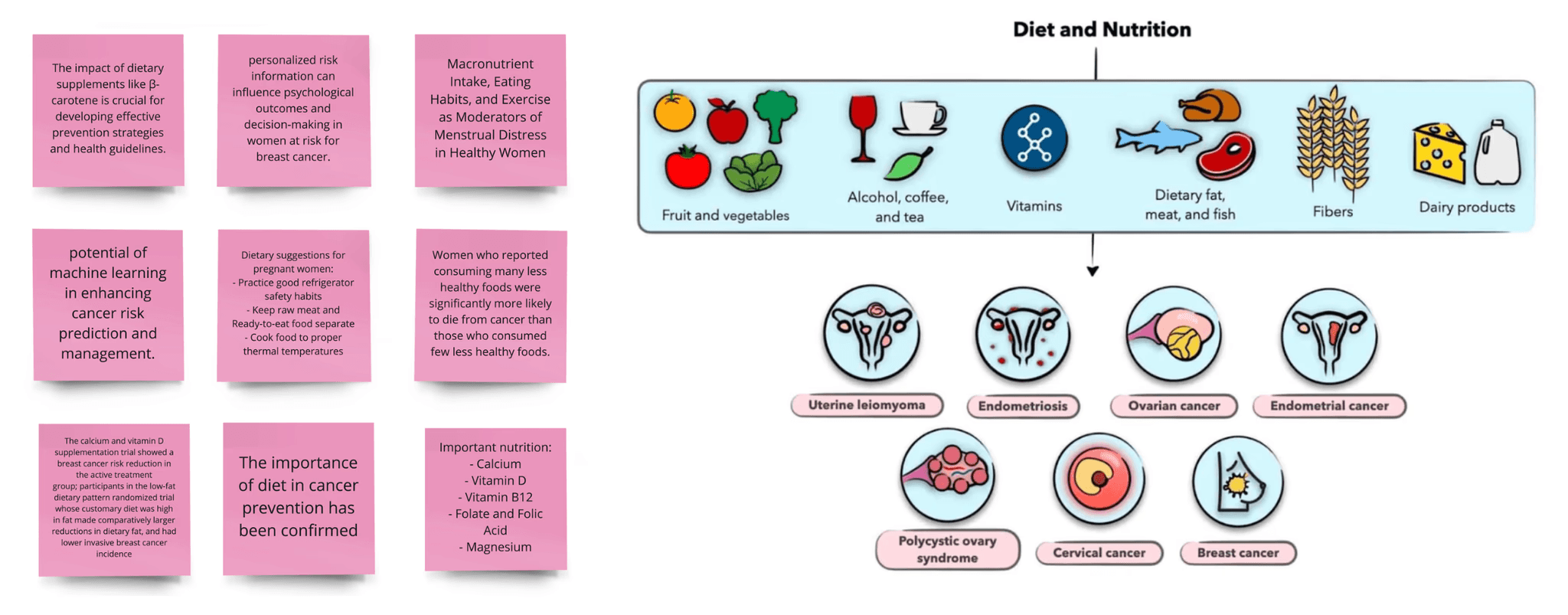
Before defining the product, we wanted to ensure we were solving a real problem—not just designing around assumptions. Since breast health is a medical topic, our team conducted a literature review by analyzing academic research and clinical studies on breast health, nutrition, and disease prevention.
A consistent pattern emerged: diet plays a significant role in breast health, yet awareness remains surprisingly low. That insight shaped our product strategy.
Literature Review - Grounding Our Decisions in Research
Before defining the product, we wanted to ensure we were solving a real problem—not just designing around assumptions. Since breast health is a medical topic, our team conducted a literature review by analyzing academic research and clinical studies on breast health, nutrition, and disease prevention.
A consistent pattern emerged: diet plays a significant role in breast health, yet awareness remains surprisingly low. That insight shaped our product strategy.
Literature Review - Grounding Our Decisions in Research
Before defining the product, we wanted to ensure we were solving a real problem—not just designing around assumptions. Since breast health is a medical topic, our team conducted a literature review by analyzing academic research and clinical studies on breast health, nutrition, and disease prevention.
A consistent pattern emerged: diet plays a significant role in breast health, yet awareness remains surprisingly low. That insight shaped our product strategy.
Comparative Analysis - Looking for the Problem No One Was Solving
Before designing the product, we wanted to understand what users already had—and, more importantly, what they were still missing. To identify market opportunities, our team conducted a comparative analysis by using leading health and wellness apps across both US and Chinese markets.
We found two distinct categories. Nutrition apps like MyFitnessPal, Cronometer, and Lose It! excelled at tracking calories and daily food intake, while women’s health apps such as Meiyou and Dayima focused on menstrual health, pregnancy, and community support.
None of them connected personalized nutrition with breast health, revealing a clear opportunity for SheWell to bridge that gap.
Before designing the product, we wanted to understand what users already had—and, more importantly, what they were still missing. To identify market opportunities, our team conducted a comparative analysis by using leading health and wellness apps across both US and Chinese markets.
We found two distinct categories. Nutrition apps like MyFitnessPal, Cronometer, and Lose It! excelled at tracking calories and daily food intake, while women’s health apps such as Meiyou and Dayima focused on menstrual health, pregnancy, and community support.
None of them connected personalized nutrition with breast health, revealing a clear opportunity for SheWell to bridge that gap.
Before designing the product, we wanted to understand what users already had—and, more importantly, what they were still missing. To identify market opportunities, our team conducted a comparative analysis by using leading health and wellness apps across both US and Chinese markets.
We found two distinct categories. Nutrition apps like MyFitnessPal, Cronometer, and Lose It! excelled at tracking calories and daily food intake, while women’s health apps such as Meiyou and Dayima focused on menstrual health, pregnancy, and community support.
None of them connected personalized nutrition with breast health, revealing a clear opportunity for SheWell to bridge that gap.

Initial User Interview - Validating the Opportunity with Real Users
To validate our assumptions, we conducted 20–30 in-depth interviews with women aged 19–59 across diverse backgrounds, occupations, and ethnicities. We explored their daily eating habits, health awareness, and past experiences with diet management to understand not only what they did, but why.
To validate our assumptions, we conducted 20–30 in-depth interviews with women aged 19–59 across diverse backgrounds, occupations, and ethnicities. We explored their daily eating habits, health awareness, and past experiences with diet management to understand not only what they did, but why.
Age 18-29
Prevent future health risks
Busy schedules and inconsistent meals
Quick, easy-to-follow nutrition guidance
Age 30-44
Balance health with family life
Pregnancy and low motivation make habits difficult
Personalized plans that adapt to life stages
Age 45-64
Maintain long-term wellness
Menopause affects metabolism and nutritional needs
Tailored nutrition and long-term health support
Age Group
Primary Need
Key Pain Point
Design Opportunity
Age 18-29
Prevent future health risks
Busy schedules and inconsistent meals
Quick, easy-to-follow nutrition guidance
Age 30-44
Balance health with family life
Pregnancy and low motivation make habits difficult
Personalized plans that adapt to life stages
Age 45-64
Maintain long-term wellness
Menopause affects metabolism and nutritional needs
Tailored nutrition and long-term health support
Although their lifestyles differed, a clear pattern emerged: most women wanted to eat healthier and proactively manage their breast health, but lacked trusted guidance and struggled to build sustainable habits within their daily routines. This insight reinforced our product strategy—to go beyond tracking and provide personalized, actionable support that fits naturally into everyday life.
Although their lifestyles differed, a clear pattern emerged: most women wanted to eat healthier and proactively manage their breast health, but lacked trusted guidance and struggled to build sustainable habits within their daily routines. This insight reinforced our product strategy—to go beyond tracking and provide personalized, actionable support that fits naturally into everyday life.
Prototypes - Low-fi
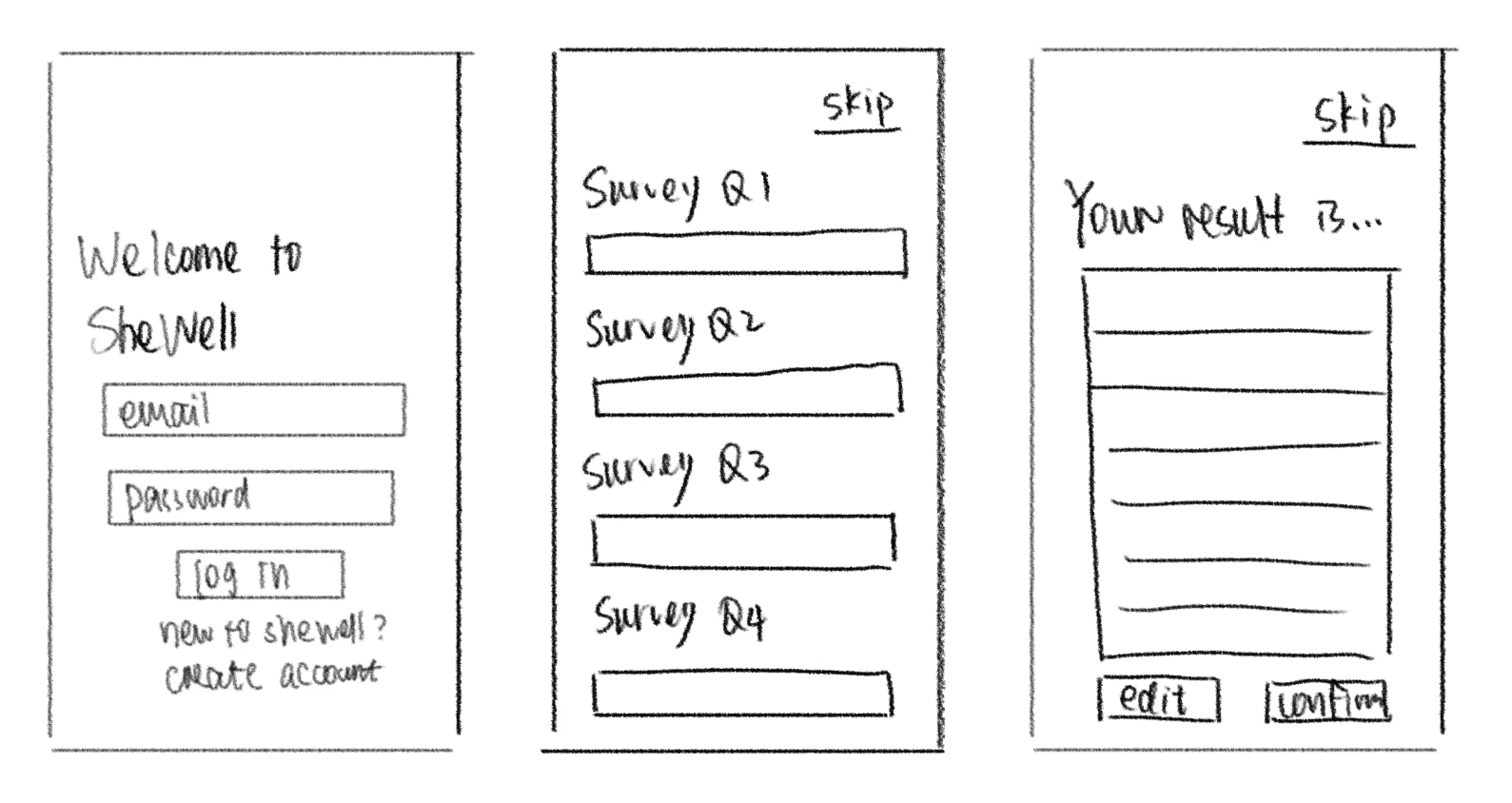
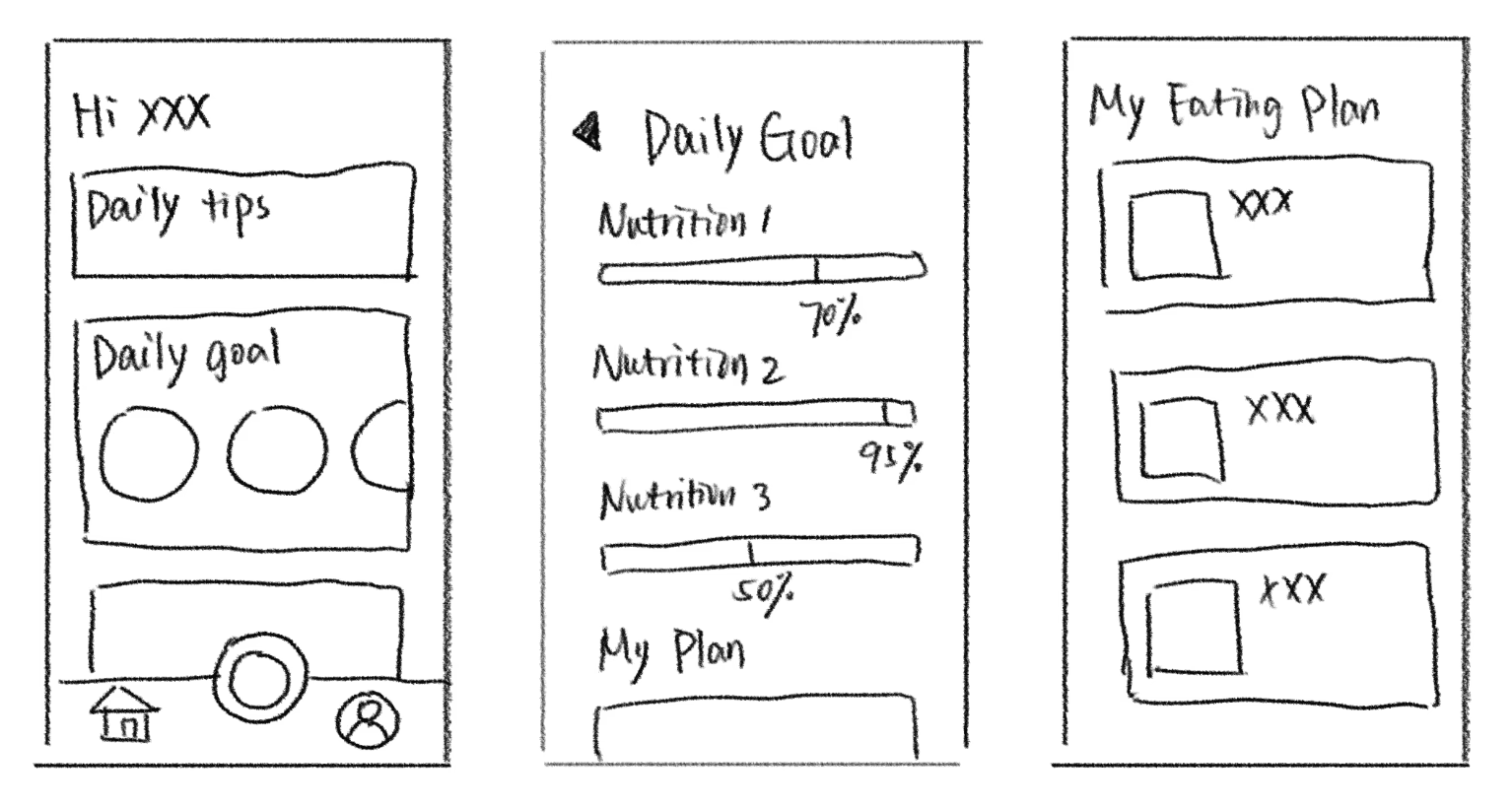
Research told us what users needed. Low-fidelity wireframes helped us figure out how to deliver it.
By visualizing the user journey early, we aligned with product and engineering, gathered feedback, and iterated on the experience before spending time on polished designs. With the flow validated, I transitioned into high-fidelity designs to refine the details.
Research told us what users needed. Low-fidelity wireframes helped us figure out how to deliver it.
By visualizing the user journey early, we aligned with product and engineering, gathered feedback, and iterated on the experience before spending time on polished designs. With the flow validated, I transitioned into high-fidelity designs to refine the details.


Design systems - Designing a Foundation for Scale
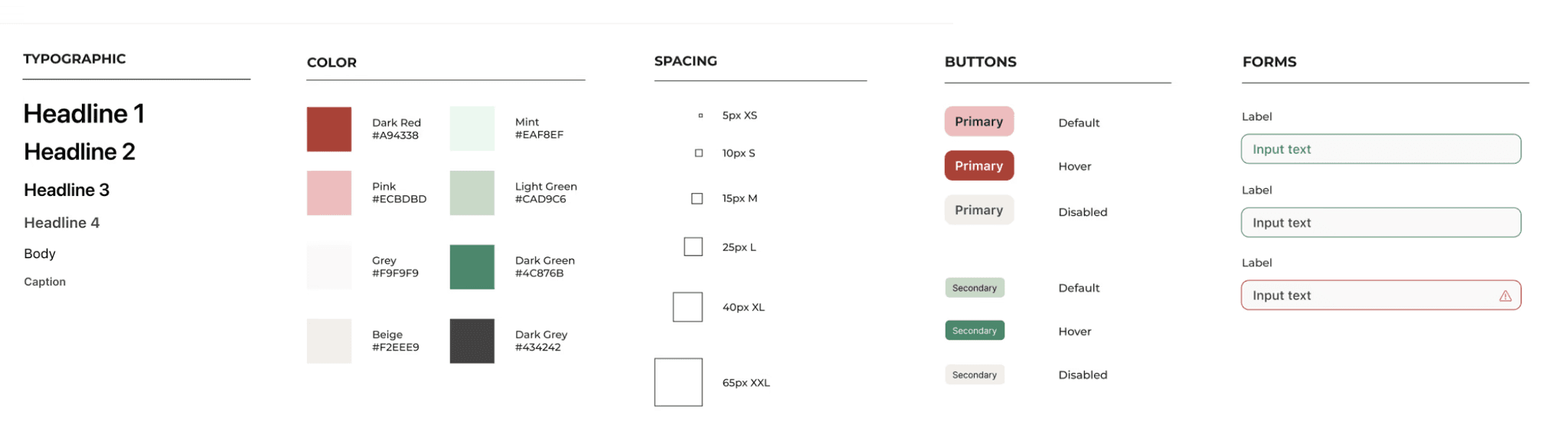
Rather than treating the UI as a collection of screens, I approached it as a scalable system. I established reusable design foundations—including typography, color, spacing, and components—to ensure consistency across the product while reducing future design and development effort. Inspired by Apple’s Human Interface Guidelines, the system emphasized familiarity, accessibility, and low cognitive load, creating an experience users could navigate with confidence.
Rather than treating the UI as a collection of screens, I approached it as a scalable system. I established reusable design foundations—including typography, color, spacing, and components—to ensure consistency across the product while reducing future design and development effort. Inspired by Apple’s Human Interface Guidelines, the system emphasized familiarity, accessibility, and low cognitive load, creating an experience users could navigate with confidence.
Iteration - Turning Feedback into Better Decisions
Usability testing helped us reduce product risk by validating the user experience, uncovering hidden pain points, and ensuring our design decisions were grounded in real user behavior.
Usability testing helped us reduce product risk by validating the user experience, uncovering hidden pain points, and ensuring our design decisions were grounded in real user behavior.
✅ What We Validated
Users quickly understood the onboarding and completed core tasks with minimal guidance.
Personalized recommendations made the experience feel relevant and actionable.
Clear navigation reduced the effort required to explore health information.
✅ What We Validated
Users quickly understood the onboarding and completed core tasks with minimal guidance.
Personalized recommendations made the experience feel relevant and actionable.
Clear navigation reduced the effort required to explore health information.
🚀 What We Iterated Next
Make food pricing more transparent during recommendations.
Add habit reminders to improve long-term retention.
Expand evidence-based educational content to build greater trust.
🚀 What We Iterated Next
Make food pricing more transparent during recommendations.
Add habit reminders to improve long-term retention.
Expand evidence-based educational content to build greater trust.
Rather than implementing every piece of feedback, I prioritized changes based on user impact, technical feasibility, and long-term scalability.
To improve engagement, I introduced customizable nutrition reminders, allowing users to choose when and how often they receive notifications.
To build trust, I surfaced evidence-based nutrition tips throughout the experience and added a dedicated data sources page linked to trusted health organizations.
Rather than implementing every piece of feedback, I prioritized changes based on user impact, technical feasibility, and long-term scalability.
To improve engagement, I introduced customizable nutrition reminders, allowing users to choose when and how often they receive notifications.
To build trust, I surfaced evidence-based nutrition tips throughout the experience and added a dedicated data sources page linked to trusted health organizations.

Users also requested food pricing, but instead of displaying prices that vary by region, I reframed the problem: users weren’t looking for exact prices—they wanted affordable recommendations. We replaced price labels with an onboarding budget survey, enabling personalized meal plans that better reflected each user’s spending habits. This approach solved the underlying user need while creating a solution that could scale across different markets.
Users also requested food pricing, but instead of displaying prices that vary by region, I reframed the problem: users weren’t looking for exact prices—they wanted affordable recommendations. We replaced price labels with an onboarding budget survey, enabling personalized meal plans that better reflected each user’s spending habits. This approach solved the underlying user need while creating a solution that could scale across different markets.
Iteration - From Tracker to Trusted Companion
Rather than adding AI as a standalone feature, we used it to solve two key challenges: sustaining engagement and building trust. By integrating GPT, users could instantly analyze meal photos or ask nutrition questions in natural language, making expert guidance feel accessible. The lightweight, conversational experience encouraged daily interactions and positioned SheWell as an ongoing health companion—not just a tracking app.
Rather than adding AI as a standalone feature, we used it to solve two key challenges: sustaining engagement and building trust. By integrating GPT, users could instantly analyze meal photos or ask nutrition questions in natural language, making expert guidance feel accessible. The lightweight, conversational experience encouraged daily interactions and positioned SheWell as an ongoing health companion—not just a tracking app.

Solution
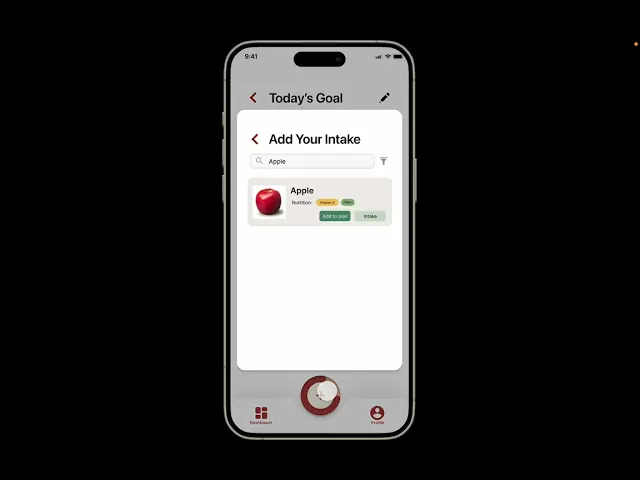
Final Design - Demo Video
Impact & Reflection
This project had a meaningful impact by highlighting the link between nutrition and breast health, with user testing showing strong positive feedback. As my first end-to-end project, it gave me the chance to learn how to translate research into design while also strengthening my teamwork and project management skills. At the same time, the work revealed several limitations: the scope was somewhat idealized without a clear business or monetization plan, and future iterations should focus on expanding localization and scalability, as well as improving accessibility through simplified information and mobile-friendly formats.
This project had a meaningful impact by highlighting the link between nutrition and breast health, with user testing showing strong positive feedback. As my first end-to-end project, it gave me the chance to learn how to translate research into design while also strengthening my teamwork and project management skills. At the same time, the work revealed several limitations: the scope was somewhat idealized without a clear business or monetization plan, and future iterations should focus on expanding localization and scalability, as well as improving accessibility through simplified information and mobile-friendly formats.