
National Geographic
2024 • Adventure game for raising awareness of wildlife
PROJECT TYPE
RPG Adventure Game Design
DURATION
3 Months
ROLE
Game Designer, UI/UX Designer
TEAM
1 Project Manager
2 Game Designers
2 UI/UX Designers
PROJECT TYPE
RPG Adventure Game Design
DURATION
3 Months
PROJECT TYPE
RPG Adventure Game Design
DURATION
3 Months
ROLE
Game Designer UI/UX Designer
ROLE
Game Designer UI/UX Designer
TEAM
1 Project Manager
2 Game Designers
2 UI/UX Designers
Design Outcome
People protect what they understand.
National Photographic is an educational game that immerses players in the role of a wildlife photographer, using exploration and interactive storytelling to build awareness of biodiversity, ecosystem conservation, and the fragile relationship between humans and nature.
People protect what they understand.
National Photographic is an educational game that immerses players in the role of a wildlife photographer, using exploration and interactive storytelling to build awareness of biodiversity, ecosystem conservation, and the fragile relationship between humans and nature.

❓Problem
Biodiversity is declining, yet conservation feels disconnected from everyday life.
Traditional learning methods struggle to engage younger audiences.
People need a more immersive way to understand why protecting wildlife matters.
👑 Goal
Turn environmental learning into an experience people genuinely enjoy.
Replace passive reading with exploration, discovery, and storytelling.
Help players build empathy for wildlife by experiencing ecosystems firsthand.
Create memorable moments that inspire curiosity beyond the game.
Background
The world’s ecosystems are changing faster than we realize
Background
The world’s ecosystems are changing faster than we realize
Background
The world’s ecosystems are changing faster than we realize
Habitat destruction, invasive species, and overharvesting are driving thousands of species toward extinction each year, highlighting the need for more engaging ways to help people understand and care about conservation.
Habitat destruction, invasive species, and overharvesting are driving thousands of species toward extinction each year, highlighting the need for more engaging ways to help people understand and care about conservation.
~ 30,000 species per year are being driven to extinction
~ 80% of the decline in global biological diversity is caused by habitat destruction
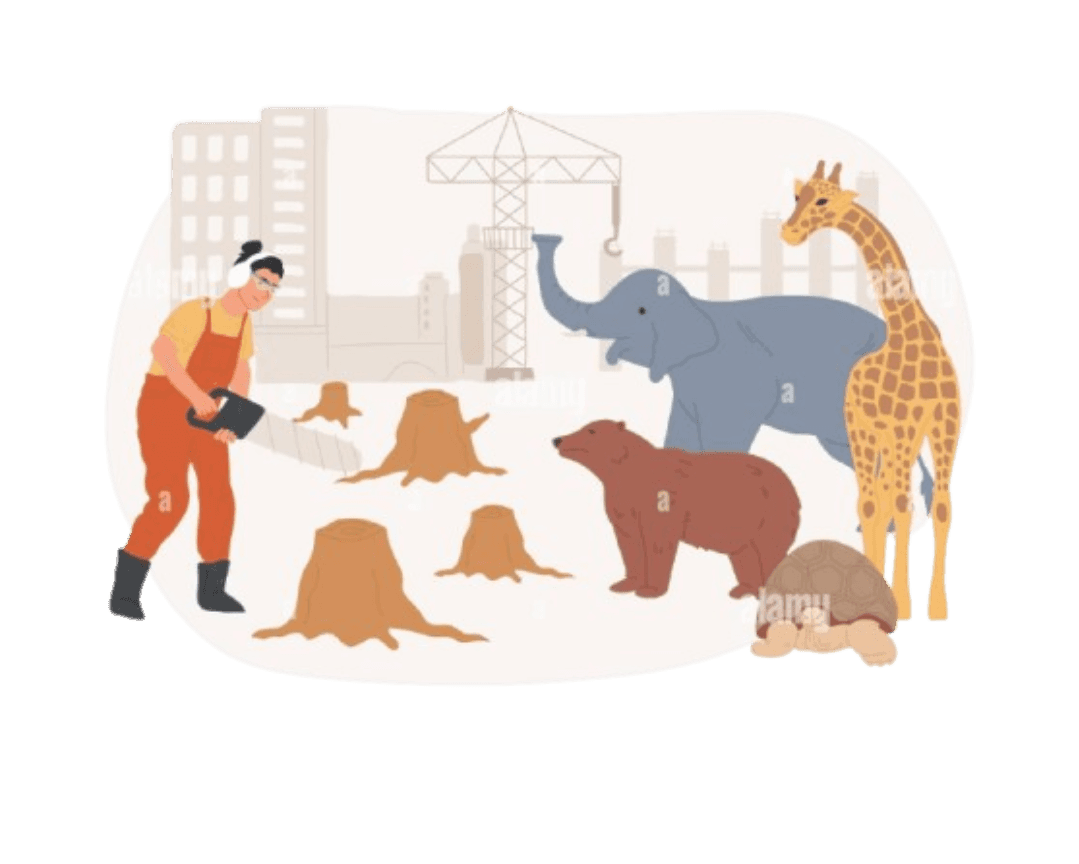
~ 30,000 species per year are being driven to extinction
~ 80% of the decline in global biological diversity is caused by habitat destruction
Design Process
Why a Game?
People protect what they connect with. Our biggest design challenge wasn’t what to teach—it was how to make people care. During team discussions, we agreed that traditional educational games often felt too instructional, making it difficult to keep players engaged. Instead, we decided to build an experience where learning would happen naturally through exploration and curiosity.
Why a Game?
People protect what they connect with. Our biggest design challenge wasn’t what to teach—it was how to make people care. During team discussions, we agreed that traditional educational games often felt too instructional, making it difficult to keep players engaged. Instead, we decided to build an experience where learning would happen naturally through exploration and curiosity.
Why a Game?
People protect what they connect with. Our biggest design challenge wasn’t what to teach—it was how to make people care. During team discussions, we agreed that traditional educational games often felt too instructional, making it difficult to keep players engaged. Instead, we decided to build an experience where learning would happen naturally through exploration and curiosity.
Making Learning Feel Like Play
Making Learning Feel Like Play
Making Learning Feel Like Play
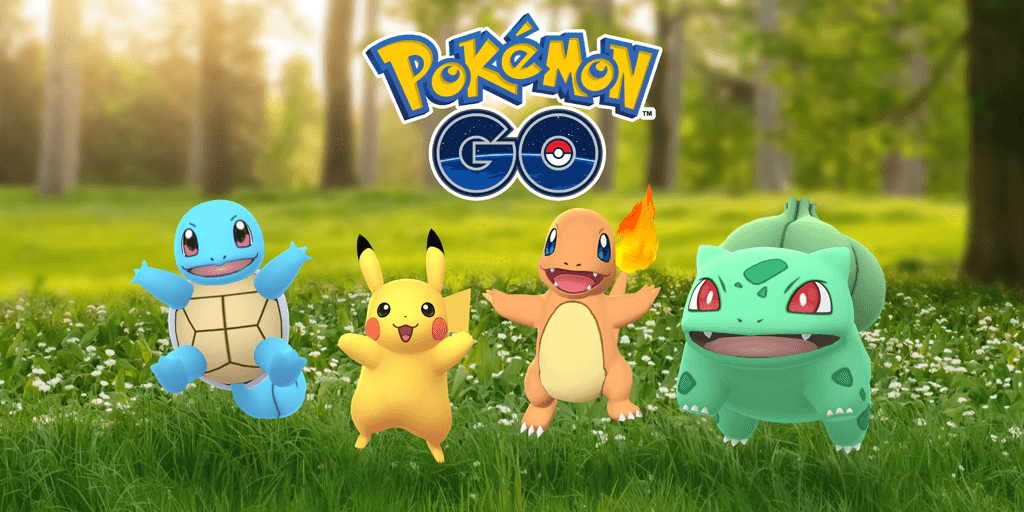
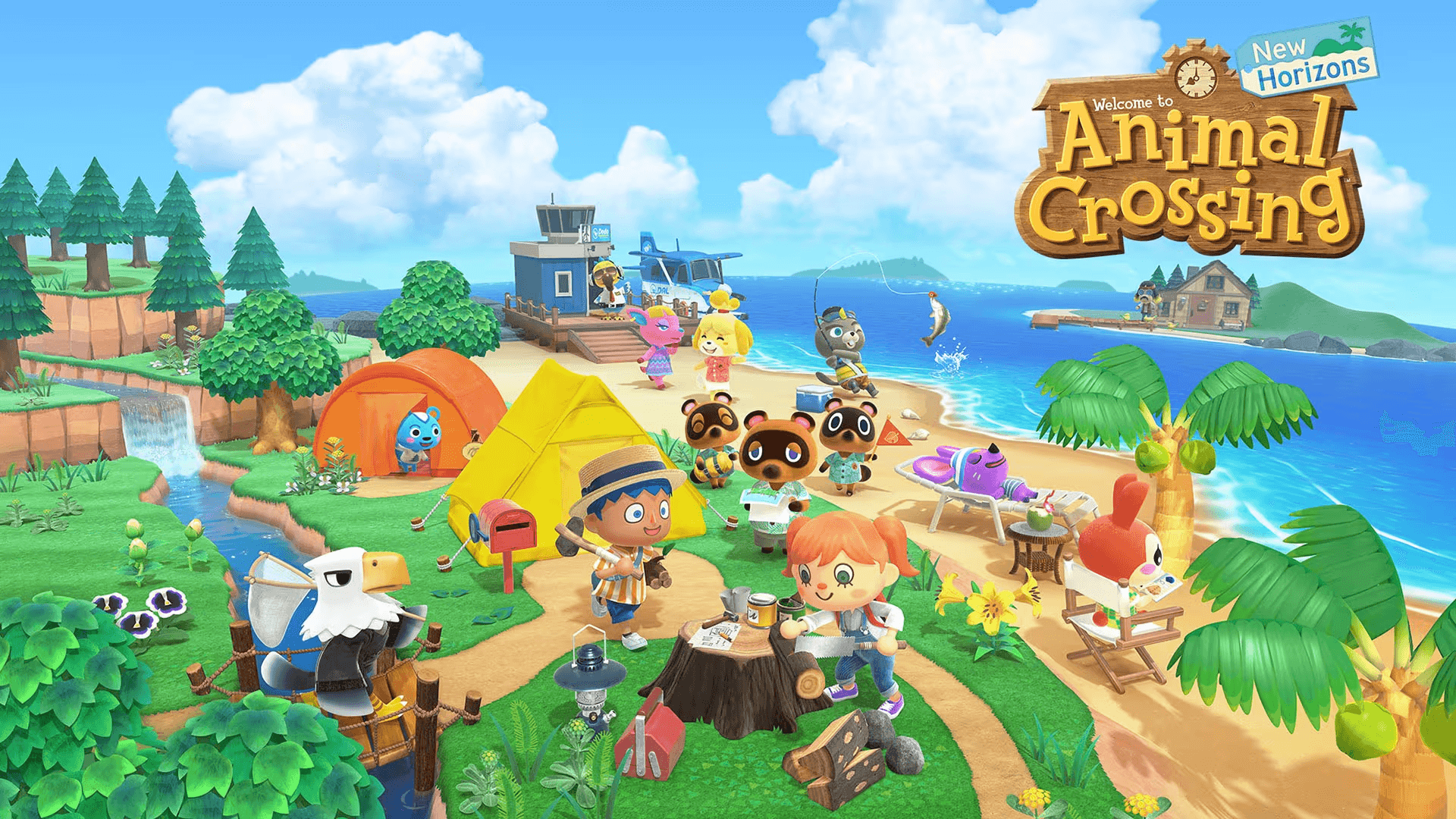
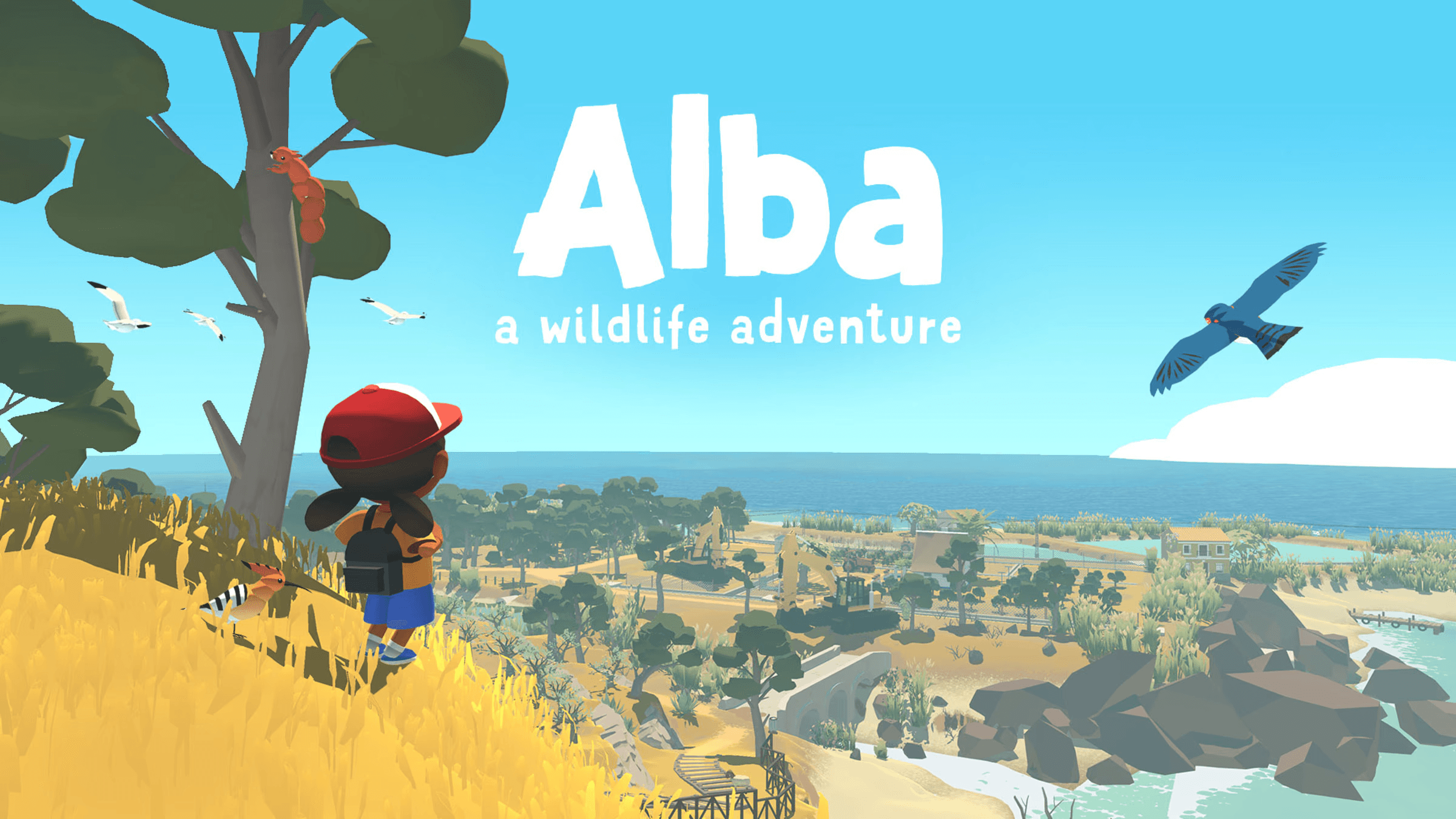
To support that vision, we drew inspiration from National Geographic for its powerful storytelling through wildlife photography, and from Pokémon Go, Animal Crossing, and Alba for their relaxing exploration and collection mechanics. Together, these references helped us define a product direction that balanced education with long-term engagement.
To support that vision, we drew inspiration from National Geographic for its powerful storytelling through wildlife photography, and from Pokémon Go, Animal Crossing, and Alba for their relaxing exploration and collection mechanics. Together, these references helped us define a product direction that balanced education with long-term engagement.
Rather than reinventing the wheel, we studied products that excelled in different ways.
National Geographic inspired the sense of discovery through wildlife photography, while Pokémon Go, Animal Crossing, and Alba demonstrated how exploration, collection, and storytelling encourage long-term engagement.
These insights helped us design a game where education becomes a natural outcome of play.

Designing Learning Through Discovery
Rather than teaching players through quizzes or text-heavy lessons, our team made a deliberate decision to let curiosity drive learning.
By casting players as wildlife photojournalists, we transformed conservation from something to read about into something to experience.
Photography became more than a game mechanic—it encouraged players to slow down, observe wildlife, and appreciate each species before learning about its role in the ecosystem.
Rather than teaching players through quizzes or text-heavy lessons, our team made a deliberate decision to let curiosity drive learning.
By casting players as wildlife photojournalists, we transformed conservation from something to read about into something to experience.
Photography became more than a game mechanic—it encouraged players to slow down, observe wildlife, and appreciate each species before learning about its role in the ecosystem.
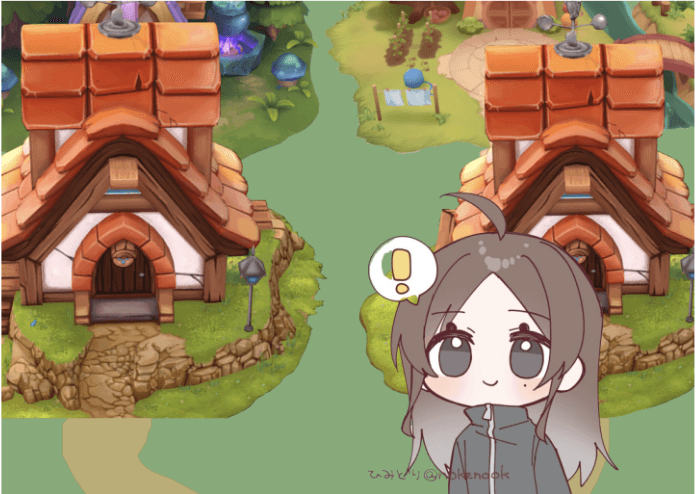
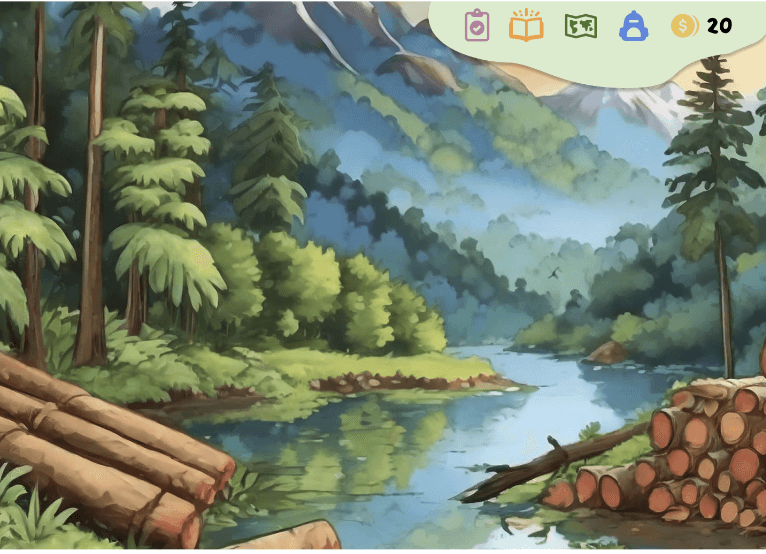
We also chose to structure the game around a series of islands, each representing a different real-world biome.
This progression creates a clear sense of exploration while introducing new ecosystems at a manageable pace.
As players document species, interact with local characters, and complete photography assignments, they naturally build knowledge about biodiversity and the environmental challenges unique to each habitat.
We also chose to structure the game around a series of islands, each representing a different real-world biome.
This progression creates a clear sense of exploration while introducing new ecosystems at a manageable pace.
As players document species, interact with local characters, and complete photography assignments, they naturally build knowledge about biodiversity and the environmental challenges unique to each habitat.
Core Game Loop & Golden Path
Every gameplay action reinforces learning. Players don’t stop playing to learn—learning happens naturally as they explore, photograph, and document wildlife.
Every gameplay action reinforces learning. Players don’t stop playing to learn—learning happens naturally as they explore, photograph, and document wildlife.
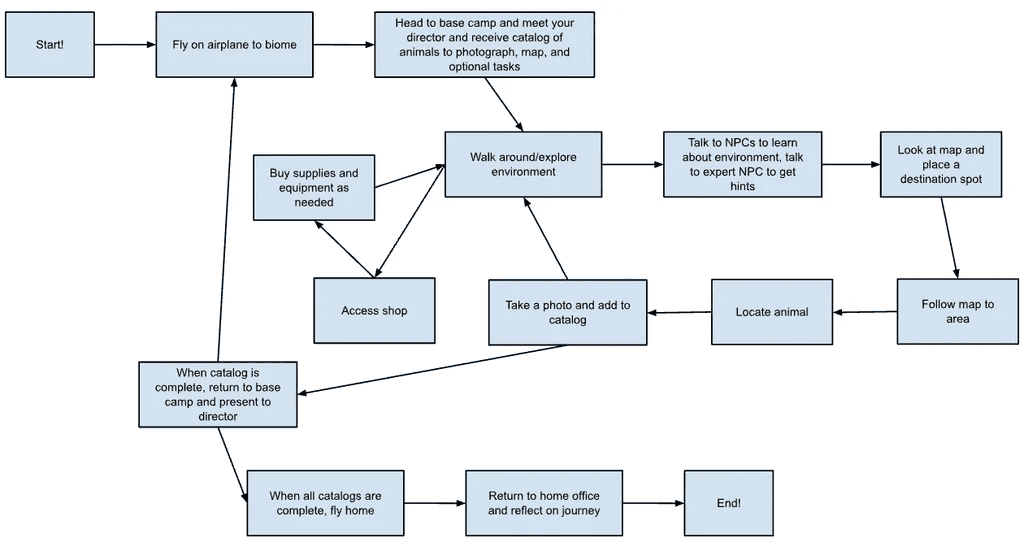
We designed a gradual progression where each biome introduces new ecosystems and conservation challenges. By increasing complexity over time, players continuously build both photography skills and environmental knowledge without feeling overwhelmed.
We designed a gradual progression where each biome introduces new ecosystems and conservation challenges. By increasing complexity over time, players continuously build both photography skills and environmental knowledge without feeling overwhelmed.
Solution
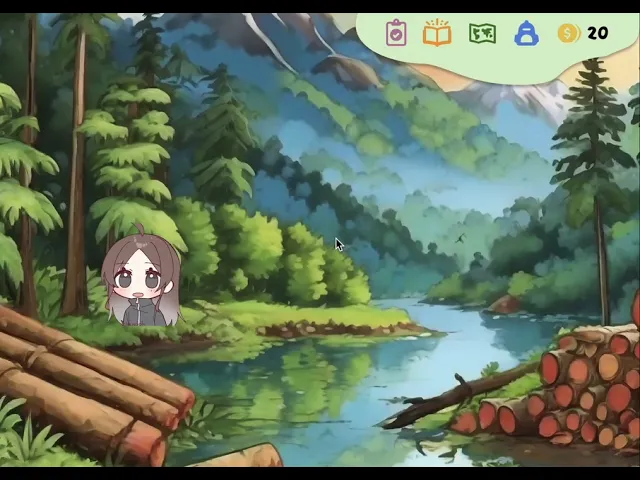
Final Design - Demo Video
Impact & Reflection
The biggest lesson wasn’t about game design—it was about human behavior.
I realized that people rarely change because they’re given more information; they change when an experience sparks curiosity, builds emotional connection, and makes action feel natural.
Designing National Photographic reinforced a principle that continues to guide my work today: whether I’m designing an AI tool, a health app, or an educational game, my role isn’t just to make products usable—it’s to create experiences that inspire people to think, learn, and act differently.
The biggest lesson wasn’t about game design—it was about human behavior.
I realized that people rarely change because they’re given more information; they change when an experience sparks curiosity, builds emotional connection, and makes action feel natural.
Designing National Photographic reinforced a principle that continues to guide my work today: whether I’m designing an AI tool, a health app, or an educational game, my role isn’t just to make products usable—it’s to create experiences that inspire people to think, learn, and act differently.